
Reviews
Rhythm Runner: Fire and Water strips platforming down to timing jumps against fire and water hazards. The music beat doubles as a timing cue, turning each level into a rhythm exercise. There are no upgrades or complex menus—just increasingly difficult obstacle sequences that reward pattern recognition and reflex training. It suits players who enjoy precision challenges and don't mind restarting from the beginning after a single mistake.
About this game
Jumping to the Beat
Rhythm Runner: Fire and Water is a precision jumping game where the player controls a character moving along a fixed path. Every jump must be timed to avoid fiery barriers and watery gaps. The music beat acts as a cue, helping players anticipate when to leap. Each level presents a unique sequence of obstacles, and the goal is to complete the course without any collisions. A single mistake sends the player back to the start, encouraging repeated attempts to learn the pattern.
Fire and Water Hazards
Obstacles fall into two categories: fire and water. Fire barriers appear as spikes or walls that require a precisely timed jump to clear. Water obstacles are pools or gaps that also demand accurate timing, as landing in them ends the run. The arrangement of these hazards changes from level to level, with new patterns introduced as players progress. Early stages feature simple, spaced-out obstacles, while later levels combine multiple hazards in quick succession. This gradual increase in complexity keeps the gameplay challenging without overwhelming newcomers.
Visual and Audio Feedback
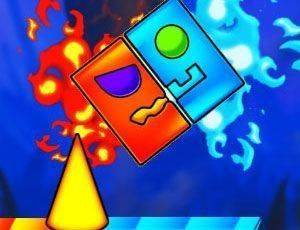
The game uses a bright, colorful art style that contrasts warm fire tones with cool water shades. This visual distinction helps players quickly identify different obstacle types. The soundtrack is upbeat and synced to the gameplay, with each level featuring a distinct track. The music serves as more than background noise; it provides a steady rhythm that players can follow to time their jumps. The combination of clear visuals and a driving beat creates an immersive environment where players feel connected to the action.
Progression and Mastery
Progression is measured by the player's ability to complete increasingly difficult levels. The game starts with short, simple courses that teach basic timing. As players advance, levels become longer and obstacles appear more frequently. This steady increase in difficulty ensures that players are constantly challenged but never overwhelmed. The lack of a traditional lives system means players can retry any level as many times as they wish, promoting a learning-focused approach. Success depends on pattern recognition and muscle memory. Players must memorize the sequence of obstacles in each level and train their reflexes to respond at the right moment. The music beat acts as a mnemonic device, helping players remember when to jump. Repeated practice is essential, as each failure provides information about the timing required. Over time, players develop a sense of flow where jumps become automatic.
Compatibility
FAQ
Comments
Sign in to leave a review
No comments yet.








Editorial Notes