
Reviews
Precision Arena: Survival Action targets players who enjoy fast, repetitive combat with escalating pressure. Its four modes give matches different priorities, and HARDCORE mode removes health regeneration for a stricter challenge. The Novice-to-Insane ranking system provides long-term goals. The main limitation is that the available information does not detail player counts, map variety, or progression speed, so expect a straightforward arcade experience rather than a deep tactical simulation.
About this game
Core Survival Loop
Every match in Precision Arena: Survival Action pushes you to outlast waves of increasingly aggressive opponents. As a new recruit, your immediate goal is survival, but the long-term objective is climbing a four-tier ranking ladder from Novice through Regular and Veteran to Insane. The game pairs fast-paced encounters with a storyline that provides context for the fighting, though the action itself stays front and center. [IMG_1]
Four Modes, Different Priorities
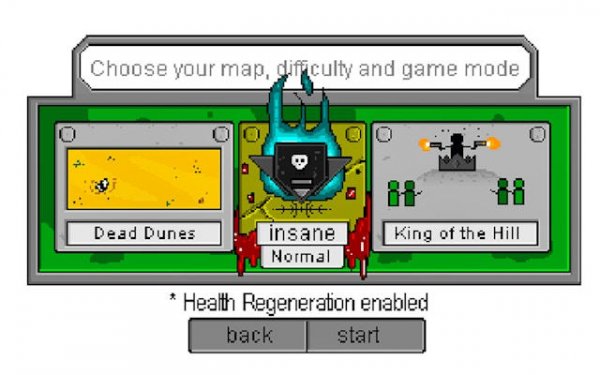
The mode you pick changes what survival means. King of the Hill asks you to hold a contested area. Capture the Flag focuses on securing objectives. Preservation tasks you with defending key points. Classic Survival Mode throws endless waves at you with no objective beyond staying alive. Objective modes reward team coordination, while Survival tests individual endurance and resource management. [IMG_2]
Difficulty and Ranking
Normal mode offers a balanced challenge suitable for learning maps and modes. HARDCORE mode removes health regeneration entirely, so every hit carries permanent weight until the match ends. The ranking system tracks consistent performance across matches, moving you from Novice toward Insane. Progress depends on winning and adapting, not just playing frequently. [IMG_3]
Maps and Atmosphere
Encounters take place across varied landscapes, from abandoned urban areas to eerie rural settings. These environments support different engagement ranges and defensive setups, though the core loop remains wave-based combat. The shift between tight urban spaces and open rural terrain keeps positioning relevant across modes. [IMG_4]
Compatibility
FAQ
Comments
Sign in to leave a review
No comments yet.






Editorial Notes