
Reviews
Classic Car Picture Puzzle delivers exactly what its name suggests: a straightforward jigsaw experience built around vintage car photos. The drag-and-drop controls work with mouse or touch, and the absence of timers or scores makes it easy to play in short bursts or long, quiet sessions. The variety of car images keeps repetition low. It is best suited to players who enjoy relaxed, low-pressure puzzles rather than competitive challenges. The only limitation is that the core loop never changes—if you want speed or scoring, look elsewhere.
About this game
Reconstructing Vintage Car Photos
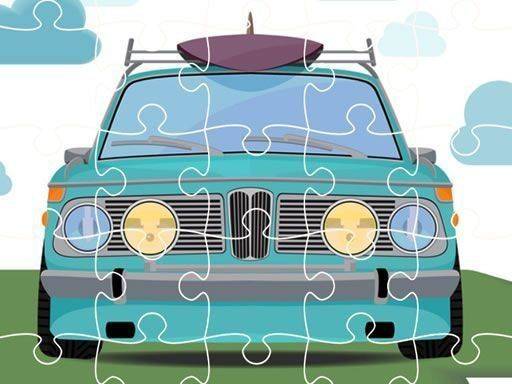
Each puzzle starts with a clear photograph of a classic car—sleek coupes, sturdy roadsters, and other recognizable models from decades past. The image breaks into scattered fragments, and your task is to move every piece back onto the grid. A satisfying snap confirms correct placement, so you always know when a piece belongs. The goal is simple: complete the picture by placing all pieces accurately.Drag-and-Drop Controls
Interaction is entirely drag-and-drop using a mouse or touch input. No menus, no instructions—just pick up a piece and slide it where you think it fits. Some versions allow piece rotation, adding a light spatial challenge. The board layout stays consistent, keeping attention on the assembly itself rather than on navigating interface elements.No Timers, No Scores, No Pressure
There are no countdowns, score tallies, or performance ratings. You can work slowly, take breaks, or finish a puzzle in one sitting. This structure makes the game accessible to younger players and anyone who prefers a calm, meditative activity. Each session lasts as long as you want, fitting easily into different schedules.Visual Variety and Pattern Recognition
The image library includes a range of classic car models, each rendered with clear detail. Bright colors and distinct shapes help differentiate pieces, reducing frustration during assembly. As you play, you naturally practice identifying edges, matching colors, and grouping pieces by shape or design. These skills build over time, making later puzzles feel more manageable. The variety of images keeps repeat play engaging, as each new puzzle offers a fresh composition to reconstruct.Compatibility
This H5 game runs smoothly on:
• Desktop computers (Windows / Mac) • Mobile phones (iPhone / Android)
• Tablets (iPad / Android)
🌐 Best experienced with Chrome, Safari, or Edge
FAQ
Is Classic Car Picture Puzzle suitable for children?
Yes. The game has no timers, scores, or failure states, and the drag-and-drop controls are simple enough for younger players. The classic car images are clear and colorful, which helps children match pieces. It can be a calm shared activity for families.
Can I rotate puzzle pieces in Classic Car Picture Puzzle?
In some versions of the game, pieces can be rotated before placement. This adds a small layer of spatial reasoning. If rotation is available, you will need to consider both position and orientation. The core drag-and-drop mechanic remains the same.
How long does it take to finish one puzzle?
There is no fixed time. Because the game has no countdowns or time limits, you can complete a puzzle in one session or return to it later. The pace is entirely up to you, and the game does not penalize you for taking breaks.
What kind of cars appear in Classic Car Picture Puzzle?
The image library features well-known vehicles from past decades, including sleek coupes and sturdy roadsters. Each photograph captures the design and character of the car. The exact models are not listed in the game description, but the focus is on classic automotive styling.
Does Classic Car Picture Puzzle require an internet connection?
The game description does not specify online requirements. It is a single-player puzzle activity with no mention of multiplayer or online features. You can likely play offline, but check your platform's store page for the most accurate information.
Is there a scoring system or difficulty progression?
No. Classic Car Picture Puzzle has no scores, ratings, or difficulty levels. The challenge comes from the complexity of each image and your own pace. As you practice, your pattern recognition improves naturally, which can make later puzzles feel easier.
Comments
Sign in to leave a review
No comments yet.






Editorial Notes