
Reviews
Treasure Grabber - Precision Arcade builds its challenge around a swinging claw and a ticking clock, turning simple grabs into a test of timing and spatial judgment. The mix of high-value treasures and low-scoring debris creates meaningful risk-reward decisions, while the credit-based upgrade shop gives progression a clear purpose. Its bright visuals and non-intrusive audio suit short sessions. Players who enjoy precision arcade games with gradual equipment growth will find the most to like; those seeking deep narrative or complex mechanics may find it limited.
About this game
Claw Control and Timing
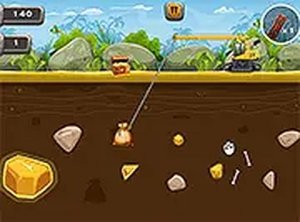
Treasure Grabber puts you in charge of a mechanical arm suspended over a cluttered play area. The claw moves both horizontally and vertically, and a single tap or click sends it downward to grab whatever sits beneath. The challenge comes from the claw's slight swing while moving, which introduces a physical simulation element. You cannot simply line up a target and drop; you have to account for momentum and release at the right moment. Each round sets a target score you must reach before the timer expires, so every grab carries weight.
Treasure Versus Debris
The field mixes high-value treasures with low-scoring junk like old bones, empty barrels, and rough stones. Grabbing debris wastes precious seconds and returns almost nothing, turning those items into traps for hasty players. Experienced players scan the layout from a distance, identify valuable targets, and plan a route that avoids clutter. This risk-reward tension defines each attempt: one mistimed grab can cost you the level.
Upgrades and Progression
Clearing a level earns credits based on your performance. These credits go toward shop upgrades for the mechanical arm, such as faster movement, stronger grip for larger items, or extended reach. Each improvement makes later levels more manageable and creates a sense of growth. Because better equipment helps, replaying earlier levels to bank more credits becomes a practical strategy rather than a chore.
Difficulty and Replay Appeal
Early stages introduce basic targets with few obstacles, giving new players room to learn the controls. As you progress, low-value items become denser and time limits tighten. Later stages demand precise planning and quick decisions. The combination of upgrade paths and rising difficulty gives the game long-term appeal for players who want to refine their technique and fully upgrade their equipment.
Compatibility
FAQ
Comments
Sign in to leave a review
No comments yet.








Editorial Notes